Best Muscle Cars for First-Time Collectors in 2026: What the Experts Actually Say
The first muscle car purchase is where enthusiasts either start a lifelong hobby or learn an expensive lesson. Two things decide the outcome: which car you pick, and whether you buy the right example of it.
The short version
For most first-time collectors, the Fox Body Ford Mustang is the consensus entry point — massive parts supply, a huge community, and genuine appreciation momentum driven by Gen X buyers. If you want golden-age sheet metal on a tighter budget, the Plymouth Duster and the first-generation Pontiac GTO both score well. The 1968–1970 Dodge Charger is Hagerty’s marquee bull-market pick for 2026, but clean R/T examples now average over $91,000 — not beginner money for most buyers.
What the reviews agree on
Buy the car, not the project
Motorious is direct: “resist the cheap, rough project.” Their first-time collector guide argues that a clean, sorted driver costs more upfront but saves money, time, and frustration, letting a new owner spend the first year driving rather than chasing deferred repairs. Tony’s Muscle Cars echoes this, noting that 2026 buyers should prioritize documentation, matching numbers, and factory-correct condition over the lowest asking price.
Parts availability matters more than newcomers expect
Motorious calls community and aftermarket support “the single most underrated factor for a first-time owner.” Every strong pick in this guide — Mustang, Camaro, Duster, GTO — has a deep aftermarket. The AMC Javelin and Mercury Cougar are compelling values precisely because they’re overlooked, but that same obscurity makes sourcing harder.
The market has split
Accio’s 2025 collector car market analysis tracked $4.8 billion in combined auction and online sales, up 10% from 2024, but found that traditional American muscle cars are among the declining segments as pandemic-era speculative buying unwound. Post-1980s modern classics, 1990s performance cars, and JDM models gained ground instead. The Yahoo Finance/Accio composite on 2026 collector segments confirms that top-tier golden-age cars — Hemi Mopars, Boss Mustangs, COPO Camaros — still command serious premiums, but “ordinary restorations and common production muscle cars have become increasingly difficult to sell at premium prices.”
Where they disagree
Golden-age metal versus modern muscle
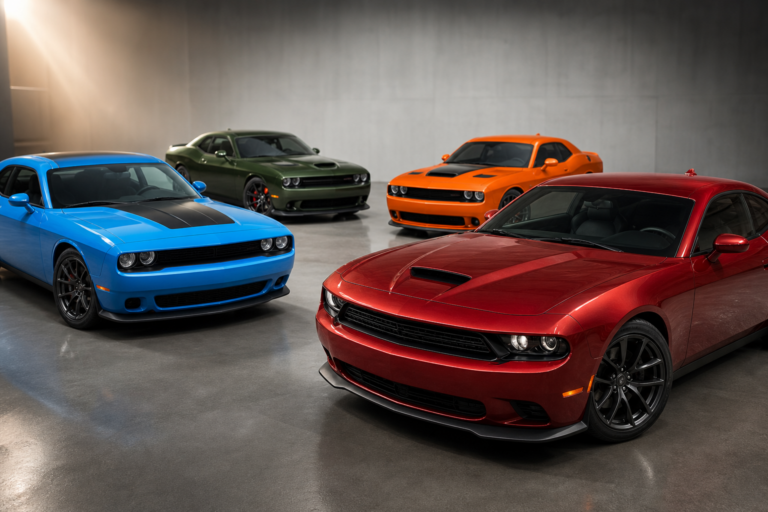
Tony’s Muscle Cars and Motorious focus entirely on 1960s–70s cars: Chevelles, first-gen Camaros, Chargers, and GTOs, where historical narrative drives the investment case. MotorBiscuit points the other way: their bargain list starts with a 435-hp S550 Mustang GT available under $20,000 and a fifth-generation Camaro SS around $30,000. Neither position is wrong. They’re answering different questions. Want a conversation piece at a show? Golden-age iron. Want to drive it every weekend without sweating a breakdown? Modern muscle wins on that count.
Is the Charger really a beginner’s pick?
Hagerty named the 1968–1970 Charger its top American muscle bull-market pick for 2026, citing that 52% of current owners are Gen X or younger — a sign, per their analysis, that demand won’t fade as older collectors age out. MoparInsiders confirms Hagerty’s average #2-condition value at $91,450 for R/T examples. Tony’s Muscle Cars lists the Charger as a top 2026 buy without addressing that price gap. HotCars’ forgotten muscle guide offers a useful counterpoint: a 1969 Mercury Cougar Eliminator with a 428 Cobra Jet at $65,900 delivers comparable era and performance against a Boss 429 Mustang priced near $200,000. The Charger is the smarter long-term hold; the Cougar is the smarter entry play for buyers who want B-body-era style without the B-body sticker.
The IROC-Z: serious collectible or nostalgia pop?
HotCars’ appreciation list reports the 1987 Camaro IROC-Z jumped from under $20,000 to over $80,000 in five years, fueled by 1980s nostalgia. That’s extraordinary. But Accio’s market analysis warns that speculative movement in nostalgia-driven segments can reverse, and the IROC-Z does not appear on Hagerty’s official 2026 bull market list. Worth watching. Not the first call for a cautious first-timer.
The picks: what reviewers back
| Car | Typical entry price | Reviewer case | Watch out for | Sourced from |
|---|---|---|---|---|
| Fox Body Ford Mustang (1979–1993) | $11,000–$60,000+ | Massive aftermarket; GenX demand pushing values ~15% recently; 2.5M produced means clean examples are findable at every price point | Floor and quarter-panel rust; heavily modified examples are everywhere — find a stock car | HotCars, TopSpeed |
| Plymouth Duster 340/360 (1970–1976) | Under $30,000 | HotCars calls it “the last truly affordable Mopar”; running drivers found for under $10,000; strong Mopar following | Hemi-clone fakes; verify firewall stampings before buying | HotCars |
| Pontiac GTO (1964–1967) | $17,000–$45,000 | Tony’s Muscle Cars calls it “the car that started the muscle car movement”; coupe from $17k; genuine historical importance | GTO clones from base Tempests are common; always decode the VIN | Tony’s Muscle Cars, MotorBiscuit |
| 1968 Chevrolet Camaro SS | ~$31,000 | HotCars rates it “arguably the most sought-after classic Chevy muscle car” at $31,100 average; enormous community and aftermarket | Subframe rust; uneven panel gaps often signal past collision repairs | HotCars |
| AMC Javelin/AMX (1968–1974) | $12,500–$40,000 | HotCars notes Javelin SST 390s average ~$20,000 on Bring a Trailer; serious V8 performance at a fraction of comparable Mopar prices | AMC-specific parts harder to source than Ford or GM equivalents | HotCars |
| 1968–1970 Dodge Charger R/T | $60,000–$91,000+ | Hagerty’s sole traditional muscle pick on its 2026 Bull Market List; 52% of owners under 55; strong generational demand confirmed by MoparInsiders | Clone/tribute cars are widespread; insist on a broadcast sheet and VIN decode | Hagerty (via Motorious, MoparInsiders) |
| Pontiac GTO (2004–2006) | ~$22,000 | MotorBiscuit notes the LS2 V8 produces 400 hp; Accio flags it as an emerging affordable collectible with broad LS-engine support | Low badge recognition outside the hobby; appreciation has been slow so far | MotorBiscuit, Accio |
The Hagerty angle
Hagerty’s 2026 Bull Market List — built on real-world sales data, insurance valuations, and owner demographics — named the 1968–1970 Charger as its sole traditional muscle car pick. Two other American vehicles made the cut: the 1990–1993 Chevrolet 454 SS pickup (average $59,800, up 57% since 2021 per Motorious’s summary of the list) and the 2006–2013 Corvette Z06 at around $55,900. Neither is a muscle car in the strict sense. The takeaway for first-time buyers: an authentic, documented Charger R/T is a different asset from a common 318-powered base car wearing the same body. Provenance is the price of entry.
FAQ
How much should a first-time collector budget?
Depends on the era you want. A clean Fox Body Mustang with no deferred work: $20,000–$35,000. A sorted first-gen GTO or Plymouth Duster: $25,000–$45,000. The 1968 Camaro SS starts around $31,000 for a good driver, per HotCars pricing data. A 1968–1970 Charger: $60,000 at the low end for a documented example, per Hagerty and MoparInsiders valuations.
Project car or driver?
Motorious recommends against projects for first-timers. The math on a rough restoration almost always works out worse than paying a premium for a clean driver, once labor is counted. Unless you have a dedicated shop, strong hands-on skills, and years of patience, a documented driver will cost less to own over three to five years than a cheap project that needs everything.
Which muscle cars have the best parts availability?
Ford Mustangs across all generations and first-gen Camaros have the deepest aftermarkets — Motorious specifically names parts supply and community as the most underrated buying criteria. Pontiac GTO parts are well-served by dedicated vendors. The AMC Javelin is the weakest of the mainstream picks; rare interior trim and body pieces require specialized, patient searching.
Is traditional muscle car collecting still a smart investment in 2026?
Selectively. Accio’s 2025 market analysis shows common-configuration cars are struggling. Hagerty’s bull market list proves that specific, well-documented examples — particularly the 1968–1970 Charger — continue to appreciate. A numbers-matching, broadcast-sheet car in a desirable configuration has a completely different trajectory from an unrestored driver with a replaced engine. Condition and provenance matter more in this market than they did three years ago.
What’s the biggest mistake first-time buyers make?
Buying on emotion at asking price without an independent inspection. Tony’s Muscle Cars stresses documentation, matching numbers, and factory-correct condition above all else. A Charger with a replaced drivetrain or a GTO cloned from a base Tempest will not appreciate like an authentic car. Commission a pre-purchase inspection from a marque specialist before committing.
Sources
- tonysmusclecars.com
- motorious.com
- hotcars.com
- motorbiscuit.com
- accio.com
- moparinsiders.com
- topspeed.com
- autos.yahoo.com
Related Articles