
Best Trailers for Hauling Classic Cars in 2026: What Owners and Reviewers Actually Say
The wrong trailer can scrape an air dam, crack a fiberglass nose, or leave a 60-year-old paint job peppered with road grit before you reach the show grounds. In 2026, owner forums, enthusiast publications, and specialist dealers point clearly toward a handful of specific options for classic car hauling.
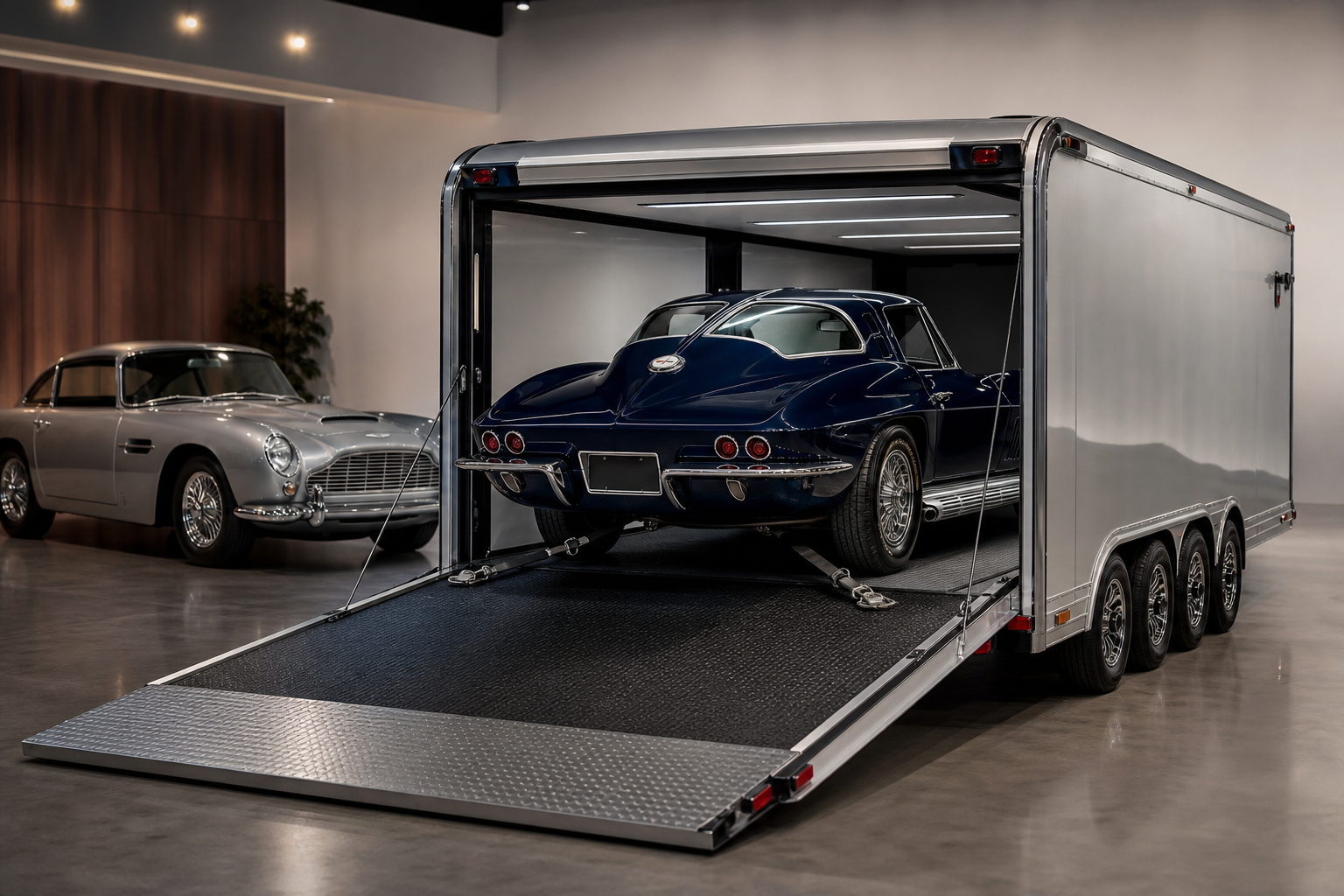
Short version: For weekend classic car hauling, an open aluminum trailer with hydraulic tilt or full-width ramps — the Featherlite 3110 is the most consistently cited name — covers the job at a reasonable price. If the car is irreplaceable, travels cross-country, or needs to weather multi-day events, an enclosed aluminum unit from Featherlite (Model 4926) or JIMGLO is the right call, at a meaningful price jump.
What the reviews agree on
Aluminum construction pays off long-term
Featherlite’s product pages make the case on their own terms — rust resistance, lighter curb weight, better resale value — and long-term owner reviews confirm it from real-world use. One owner report cited in Featherlite customer feedback describes selling a 2009 Featherlite 4926 enclosed unit above its original purchase price nearly twelve years after buying it new. Steel trailers cost less upfront and weld more easily at a roadside shop, but the rust clock starts on contact with wet pavement.
Hydraulic tilt is not optional for low-clearance cars
H&H Trailers’ Aluminum Speed Loader Tilt uses a “12V Hydraulic Pump with Push Button Control” that lays the deck nearly flat for loading. H&H’s own spec pages note that low-profile models are available specifically for vehicles with ground-clearance restrictions — which covers most original muscle cars, British roadsters, and anything with an aftermarket front splitter. Poplar Bluff Trailer’s car-hauling roundup singles out H&H precisely for this loading scenario. A steep aluminum ramp is where spoilers get crunched.
GVWR matching matters more than deck length
Caballus Trailers’ 2026 car-towing guide flags GVWR mismatch as the most common buyer mistake. The math is simple: trailer curb weight plus vehicle weight must sit below your truck’s rated tow capacity, with room left for passengers, fuel, and tools. A Featherlite 3110 in its 24-foot configuration weighs around 2,300 lbs empty, per Featherlite’s own spec sheets. Add a 3,800-lb 1969 Camaro and you’re at 6,100 lbs before anything else goes in the truck bed.
Featherlite’s warranty is the benchmark
A 10-year limited structural warranty plus a 3-year hitch-to-bumper warranty on 2013-and-newer models — Featherlite publishes this on every product page, and owner discussions across multiple forums treat it as a genuine differentiator. No competing aluminum brand at a similar price point matches it.
Where they disagree
Open vs. enclosed: a genuine split
jimglo.com’s enclosed trailer comparison argues for full enclosure on any collectible — weather, UV damage, road debris, and theft risk all cut against open hauling, the piece maintains. The Grassroots Motorsports open-versus-closed forum thread runs the other direction: multiple owners with show-quality cars note that a fitted car cover solves the weather problem and that open trailers let you check tie-down tension with a glance while driving.
Cost drives most of the disagreement. Caballus Trailers’ 2026 guide puts new open car haulers at $3,500–$9,000. Standard enclosed bumper pulls start at $9,000–$13,000+; premium enclosed units reach $13,000–$20,000+. For a hobbyist with a $6,000 budget, the open trailer wins by default.
Premium vs. mid-tier enclosed
jimglo.com’s brand blog compares three enclosed options head-to-head. The JIMGLO unit starts at $28,995; Futura’s enclosed at $28,495; Featherlite’s 4926 at $17,000+. JIMGLO’s main differentiator is a full sidewall door — the company describes it as something “no other brand does” in the segment. Whether that $11,000 premium over the Featherlite is worth it depends on how often you need side access while loaded. Professional haulers who access the interior daily tend to favor JIMGLO; weekend owners loading twice a year usually land on Featherlite’s warranty coverage and dealer network.
Bumper pull vs. gooseneck for one car
Trailer Streets’ detailed comparison names goosenecks as the right choice for multi-car professional hauling — better stability at highway speeds, 20,000-plus-lb capacity, tighter turning radius in tight lots. But the same review calls bumper pull “sufficient” for a hobbyist moving a single car to shows. The practical blocker with goosenecks: a dedicated bed-mounted ball hitch costs extra and occupies truck bed space permanently. For the private classic car owner moving one vehicle at a time, bumper pull handles the job without the overhead.
PJ vs. Big Tex for steel open builds
NC4x4 and related owner forums have run the PJ Trailers vs. Big Tex comparison for years. Forum consensus across multiple threads favors PJ on weld quality, wiring harness construction, and powder coat durability — particularly in wet climates. Big Tex earns the “best value for the money” nod when budget is tight and the trailer lives in dry conditions. For owners hauling collectibles where presentation matters, the PJ vote is consistent.
Trailer comparison: top picks for classic car hauling in 2026
| Trailer | Type | Key Specs | Price (approx.) | Sourced from |
|---|---|---|---|---|
| Featherlite 3110 | Open aluminum, bumper pull | 14–24 ft lengths; axles up to 6,000 lbs; 19-inch deck height; 10-yr structural warranty | Dealer quote | Featherlite product pages; long-term owner reviews |
| H&H Speed Loader Tilt | Open aluminum, hydraulic tilt | 82-inch wide; 18–24 ft; GVWR 7,000–14,000 lbs; low-profile models available | Dealer quote | H&H Trailers product page; Poplar Bluff Trailer roundup |
| Featherlite 4926 | Enclosed aluminum, bumper pull | 16–32 ft; 8 ft 6 in wide; 7-ft interior height; aerodynamic v-nose | $17,000+ | jimglo.com comparison; Featherlite product pages |
| JIMGLO Enclosed | Premium enclosed aluminum | 18–26 ft; 2,700-lb trailer weight; 7,000-lb capacity; full sidewall door | $28,995+ | jimglo.com brand blog (best-overall pick) |
| Futura Enclosed | Premium enclosed | Aluminum construction; premium segment; multi-car configurations available | $28,495+ | jimglo.com three-way comparison |
FAQ
Do I need an enclosed trailer for a classic car?
Not by rule. jimglo.com argues enclosed is the right call for any collectible, citing weather, UV, and theft protection. Grassroots Motorsports forum owners push back: a quality fitted cover on an open trailer handles weather at a fraction of the cost, and you can monitor tie-downs while driving. For long interstate hauls or genuinely irreplaceable vehicles, the enclosed premium is defensible. For local weekend shows, open works for a lot of owners.
How do I load a low-clearance classic without scraping?
A hydraulic tilt trailer removes most of the risk. H&H Trailers’ Speed Loader Tilt uses push-button control to lay the deck nearly flat, eliminating the steep approach angle that catches front splitters. If you’re working with a ramp trailer, full-width fold-up ramps — an option on the Featherlite 3110 — spread contact across the car’s full track width rather than two narrow strips.
What GVWR do I need for a 4,000-lb classic?
Add the car’s weight to the trailer’s empty weight, then leave a 10–15% buffer below your truck’s rated tow capacity. A Featherlite 3110 in 24-foot trim weighs roughly 2,300 lbs empty per Featherlite’s spec sheets — that puts the 4,000-lb car plus trailer at 6,300 lbs before any gear. Caballus Trailers’ 2026 buying guide names GVWR mismatch as the top mistake buyers make.
Is aluminum worth the extra cost over steel?
For a classic car trailer, owner experience consistently says yes. Aluminum resists rust (important if the trailer sits between seasonal uses), weighs less (improving payload margin and fuel economy), and holds resale value longer. The real trade-off is repairability: a bent aluminum frame rail needs a specialist welder, where steel can often be patched at any rural shop. In wet or coastal conditions, aluminum’s long-term durability case is hard to argue against.
Bumper pull or gooseneck for a single classic?
Bumper pull handles a single car. Trailer Streets’ comparison is direct: goosenecks are the professional choice for multi-car hauling, but bumper pull is sufficient for a hobbyist moving one vehicle to shows. Goosenecks need a bed-mounted hitch, cost more to buy, and use truck bed space permanently. Unless you’re running a hauling business or moving multiple cars at once, a bumper pull paired with a properly rated truck is the practical answer.
Sources
Related Articles